
 Image 1 of 1
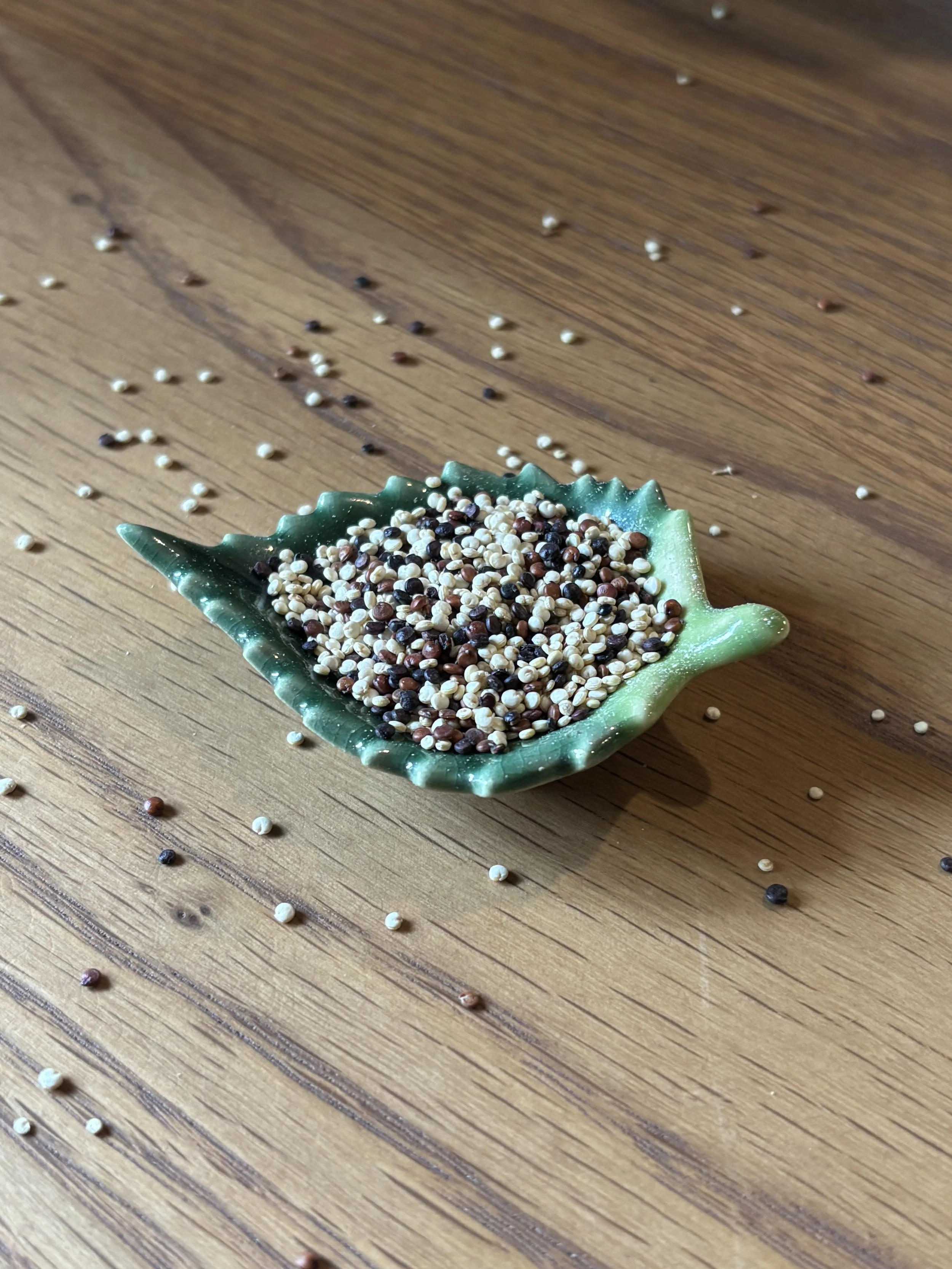
What is it? Quinoa is a seed that we cook and eat like we do grains. It is from a plant related to spinach, amaranth, chard, and beets.
First Cultivated: Andean region near Lake Titicaca about 5,000–7,000 years ago
Our Source: Peru, Bolivia, USA, and Canada via Azure Standard. This quinoa is USDA certified organic.
Tasting Notes: Mild, grassy
Health Benefits: Complete source of protein that includes all nine essential amino acids. High in fiber, magnesium, iron, and manganese.
How to Cook: Before cooking, rinse quinoa with water in a fine mesh strainer. Use 1 cup quinoa to a scant 2 cups liquid, plus 1 tsp salt. Bring to a boil, then immediately cover, lower the heat, and simmer for 10 or so minutes until water is absorbed. Remove from the heat and let stand, covered, for 5–10 minutes before fluffing with a fork and serving.
Fun Fact: Due to its high protein and nutrient density, NASA has deemed quinoa an ideal food for long-term space missions.