
 Image 1 of 1
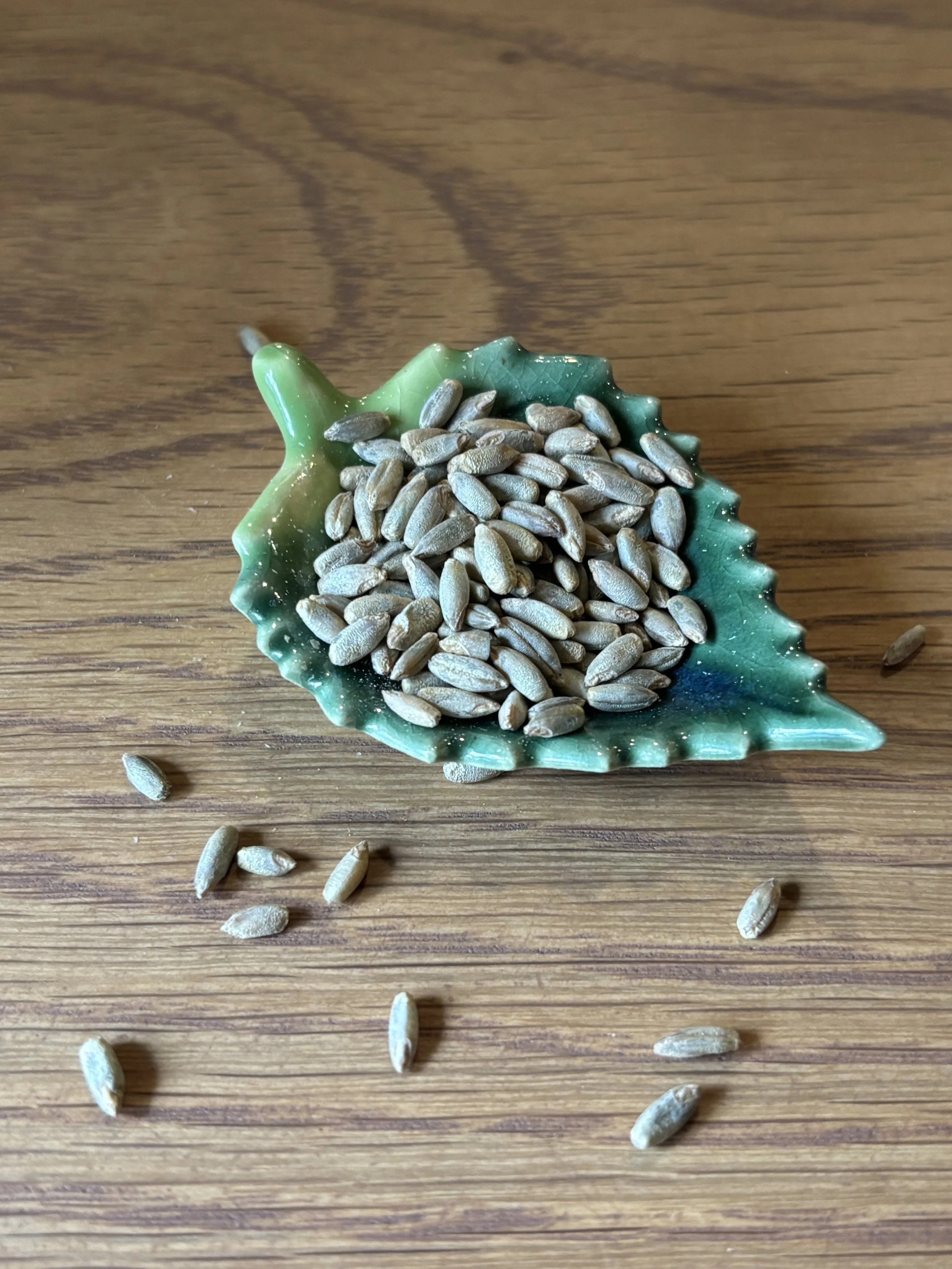
What are they? Rye is a non-wheat cereal grain. Rye berries are the whole, unprocessed kernels of the rye grain after its inedible husk has been removed.
First Cultivated: Euphrates valley region (currently northern Syria) in 11,000 BCE
Our Source: USA via Azure Standard. These rye berries are USDA certified organic.
Tasting Notes: Earthy, slightly malty
Health Benefits: High in protein, fiber, phosphorus, iron, and potassium. Low in gluten, but not gluten-free.
How to Cook: 1 cup rye berries to 3 cups liquid, plus 1 tsp salt. Bring to a boil, then immediately lower the heat, cover, and simmer for up to 60 minutes until tender. Once cooked, drain off excess water, if any. Toasting the rye berries ahead will add depth. You can also add aromatics, stock, and/or herbs to the pot to round out flavor.
Fun Fact: Rye grass is used to make mattresses, hats, and paper.Showcase what this product is about. What’s it made of? How was it made? What are ways to enjoy it?