
 Image 1 of 1
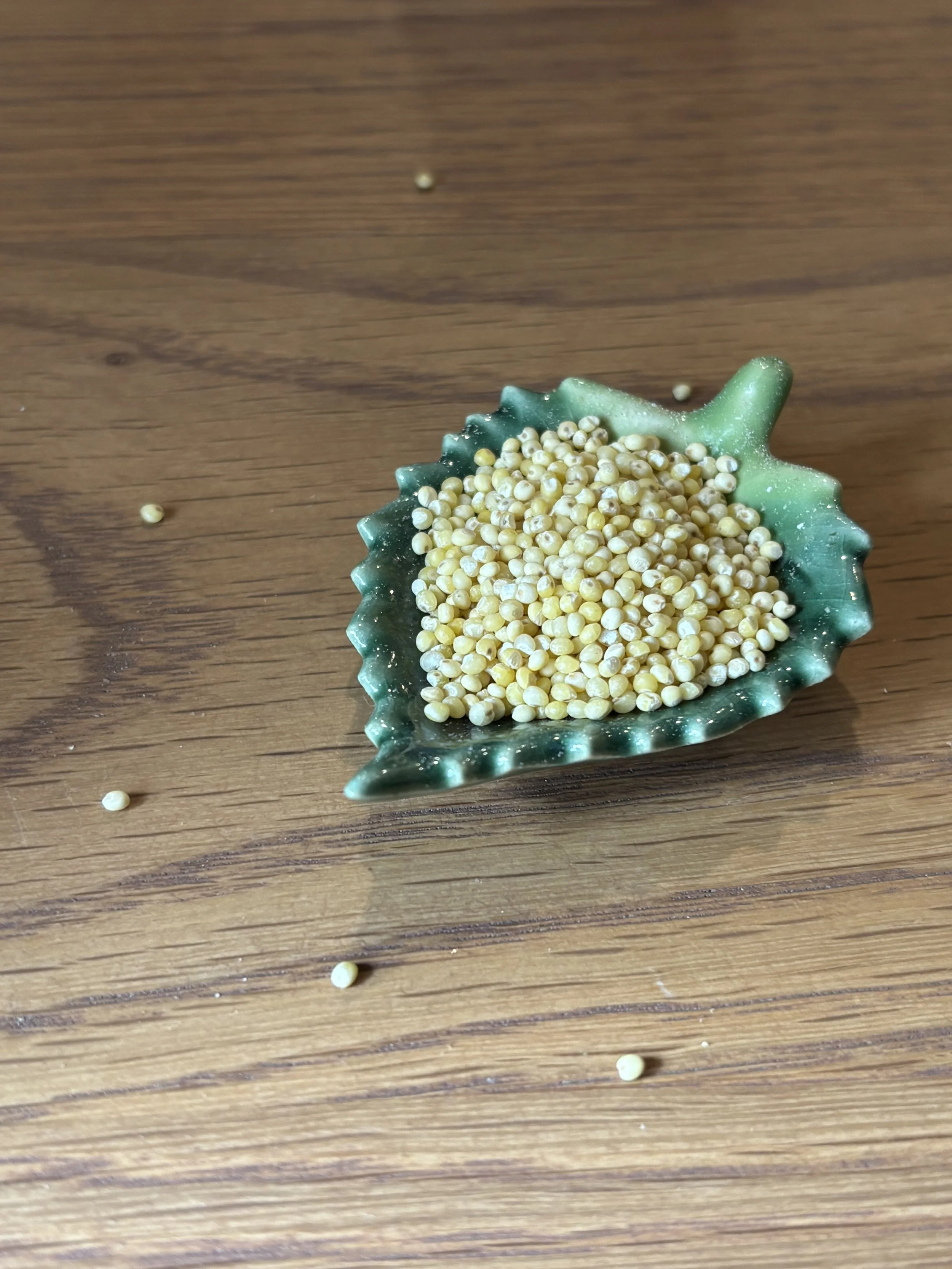
What is it? Millet is a non-wheat, gluten-free cereal grain. It is an adaptable grain that nicely takes on added flavors.
First Cultivated: Northern China about 6000–8000 BCE. Various varieties of millet were also cultivated in Africa and India about 3000 BCE.
Our Source: USA via Azure Standard. This millet is USDA certified organic.
Tasting Notes: Sweetly nutty, corn-like
Health Benefits: Gluten-free! Good source of dietary fiber, protein, calcium, magnesium, B-vitamins, and plant antioxidants.
How to Cook: Before cooking, rinse millet with water in a fine mesh strainer. Use 1 cup millet to 2 cups liquid, plus 1 tsp salt. Bring to a boil, then immediately cover, lower the heat, and simmer for 15 minutes until water is absorbed. Remove from the heat and let stand, covered, for 10 minutes before fluffing with a fork and serving. Toast the millet in a pan before cooking to bring out its natural nuttiness.
Fun Fact: Millet is a particularly eco-friendly crop: it is drought-resistant, grows in infertile soil, and uses up to six times less water to grow than rice does.