
 Image 1 of 1
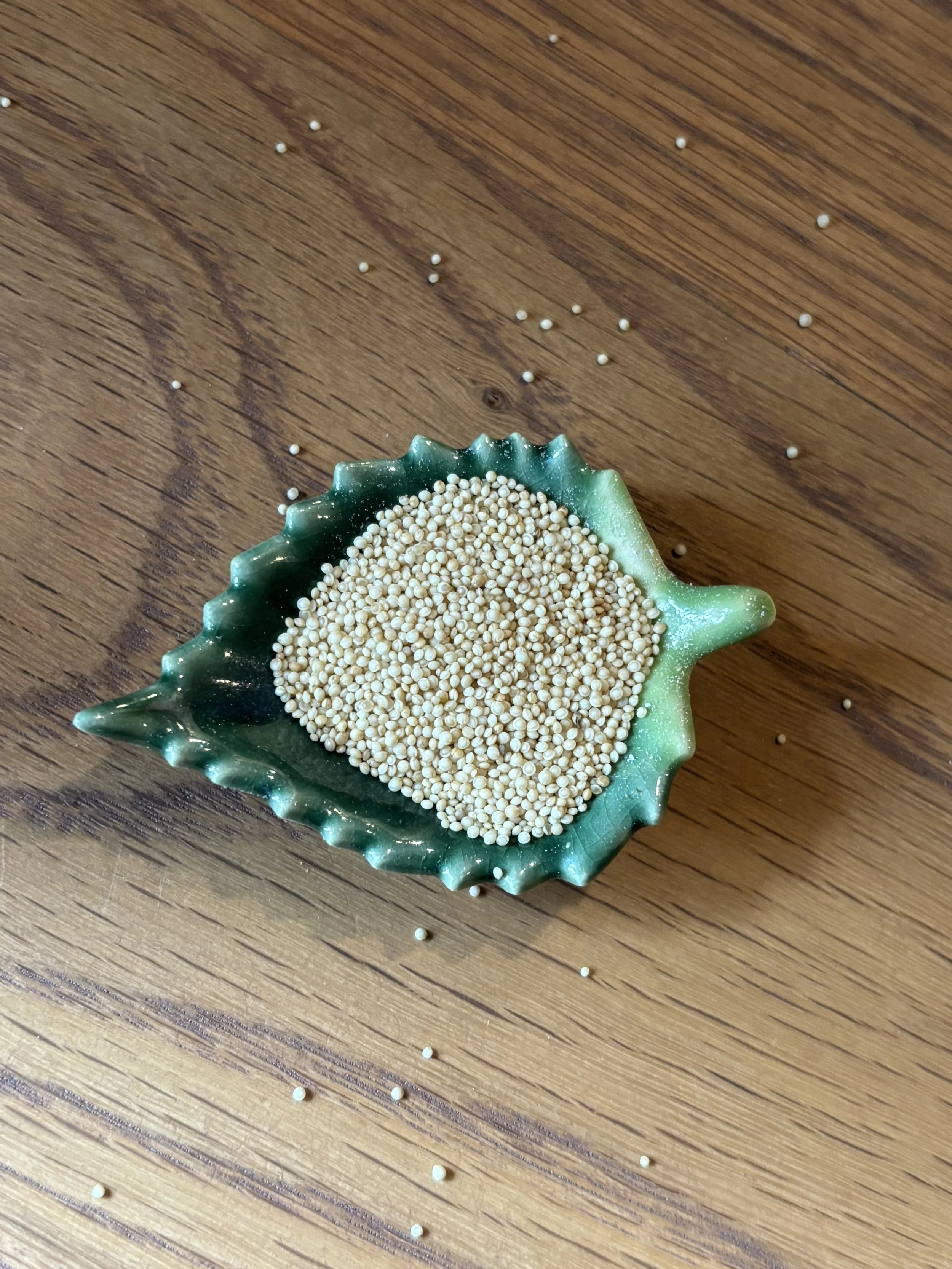
What is it? Amaranth is a seed, like quinoa, that we cook and eat like we do grains. It can be cooked into porridge, popped like popcorn, or ground into flour.
First Cultivated: Central America in 4000–6000 BCE
Our Source: Bolivia
Tasting Notes: Woody, earthy, slightly peppery
Health Benefits: Complete source of protein that includes all nine essential amino acids. High in manganese, magnesium, and phosphorus.
How to Cook: 1 cup amaranth to 2.5–3 cups liquid, plus 1 tsp salt. Bring liquid to a boil, stir in amaranth, then immediately lower the heat, cover, and simmer for 20-25 minutes, stirring occasionally, until tender. Once cooked, drain off excess liquid, if any. Toasting the amaranth ahead will add depth. You can also add aromatics, stock, and/or herbs to the pot to round out flavor. Or add coconut milk, dried fruit, and nuts for a morning porridge.
Fun Fact: A single amaranth plant can produce up to 60,000 seeds per year.